EcoFlow · buying guide
EcoFlow whole home battery: what to buy, what it costs.
Two systems, one panel decision that swings the price by thousands, and three separate costs most listings never add up for you. Written from a Charleston house running this hardware on Dominion Rate 7.
See which size fits your house →Free · about 2 minutes · just a recent power bill
The two systems worth considering
EcoFlow's whole-home line comes down to two choices. The difference that matters is not storage — both expand — it is how much power they can deliver at once.
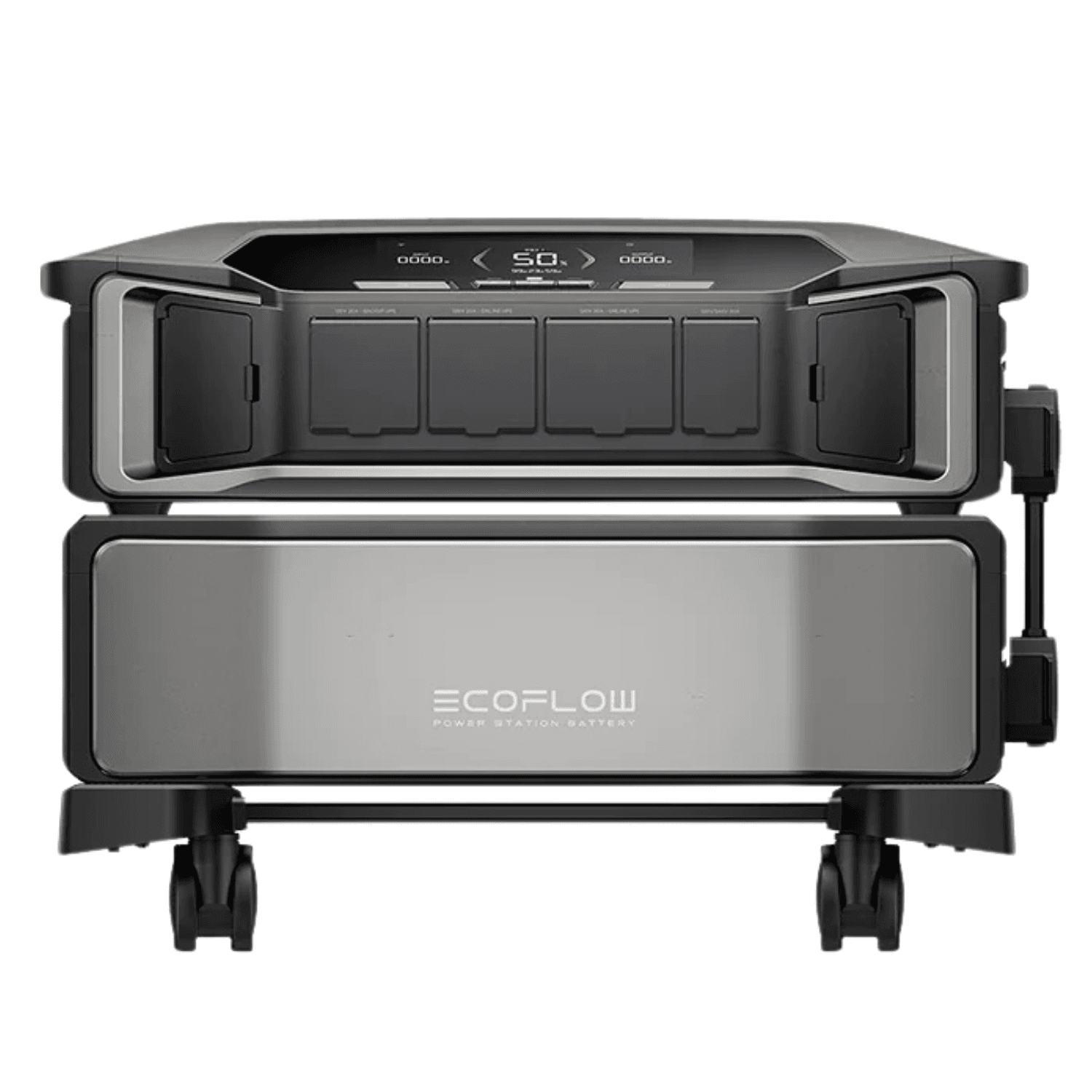
DELTA Pro Ultra
$3,700–$4,300
- 6.1 kWh to start, up to ~30 kWh
- 7.2 kW output — essential circuits
- Up to 5.6 kW solar input
- The right call for most homes
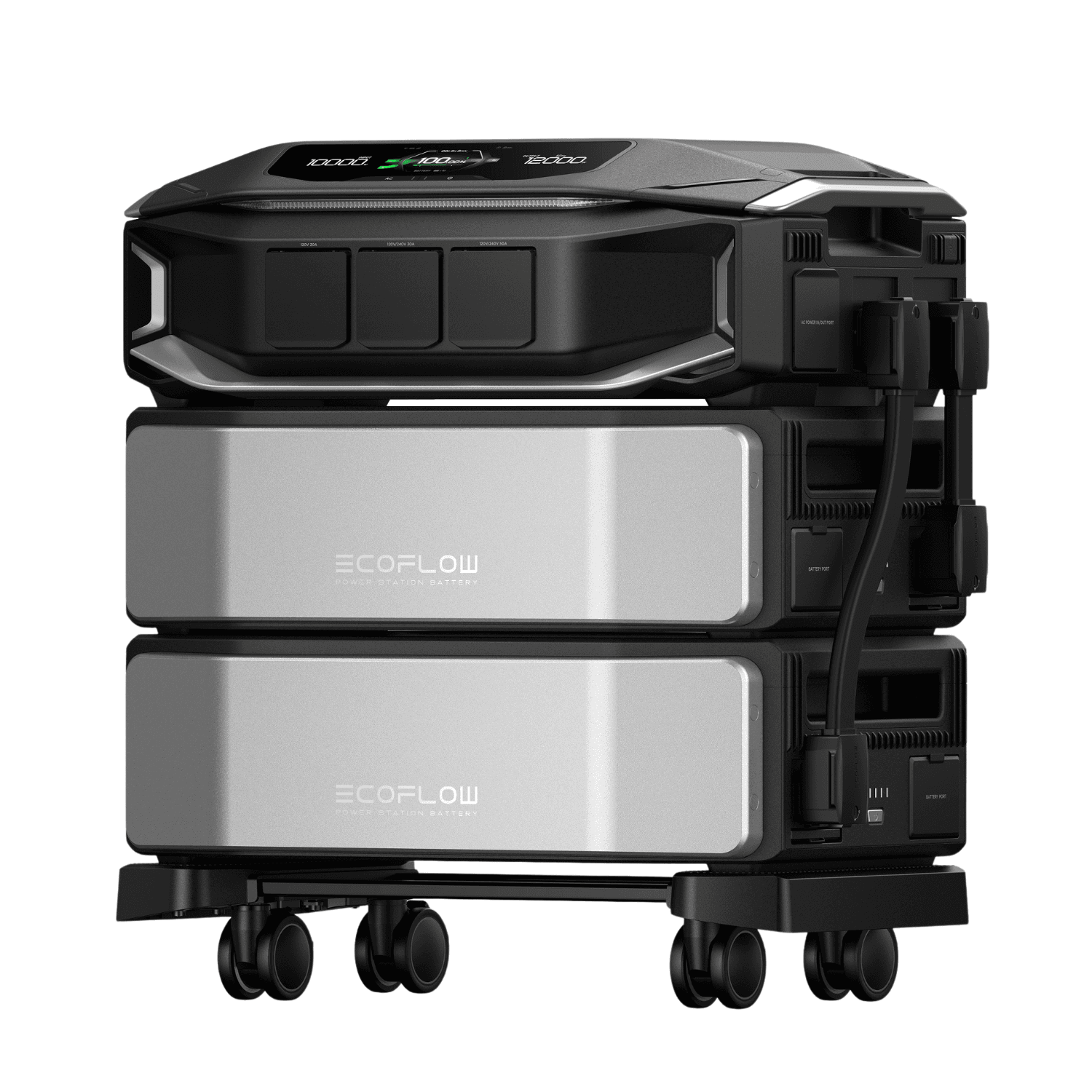
DELTA Pro Ultra X
$7,000–$8,000
- 12.2 kWh to start, up to ~61 kWh
- 12 kW output, 45 kW surge — runs central AC
- Up to 10 kW solar input
- Worth it if you need cooling or scale
NRG Sense may earn a commission if you buy through our link — at no extra cost to you, and it never changes our numbers. We earn the same rate on every brand we list. How this works →
Both expand with 6.1 kWh modules at $1,900–$2,200 each, so starting smaller and adding capacity later is a legitimate strategy rather than a compromise.
The Smart Home Panel, and the cheaper way around it
Product listings price the battery alone, so this is where budgets break. A battery on its own does not take over when the grid fails. There are two ways to bridge that, and only one of them costs three thousand dollars.
Inlet box + interlock kit
The manual route — far cheaper
An electrician fits a generator inlet and an interlock kit to your existing panel. The interlock is a mechanical plate that makes it physically impossible to have the main breaker and the backfeed breaker on at the same time, which is what keeps you from energising the utility line.
In an outage you kill the main, slide the interlock, plug the battery in, and switch on the circuits you want. It works, and it costs a fraction of a smart panel.
Smart Home Panel 3
$2,800–$3,200 + more install labour — automatic
Senses the outage and moves your backed-up circuits across in a fraction of a second. Nothing to do, and nothing to remember at 2 a.m.
It replaces your main service panel, which is why it costs considerably more to install than an inlet and interlock — this is genuine electrical work, not a plug-in job.
The thing that usually decides it is not the outage. An interlock gives you backup. It does not give you bill savings — daily time-of-use arbitrage means moving your house onto the battery every afternoon and back every night, and nobody does that by hand twice a day. If the reason you are buying is a lower bill on a time-of-use rate, the smart panel stops being optional.
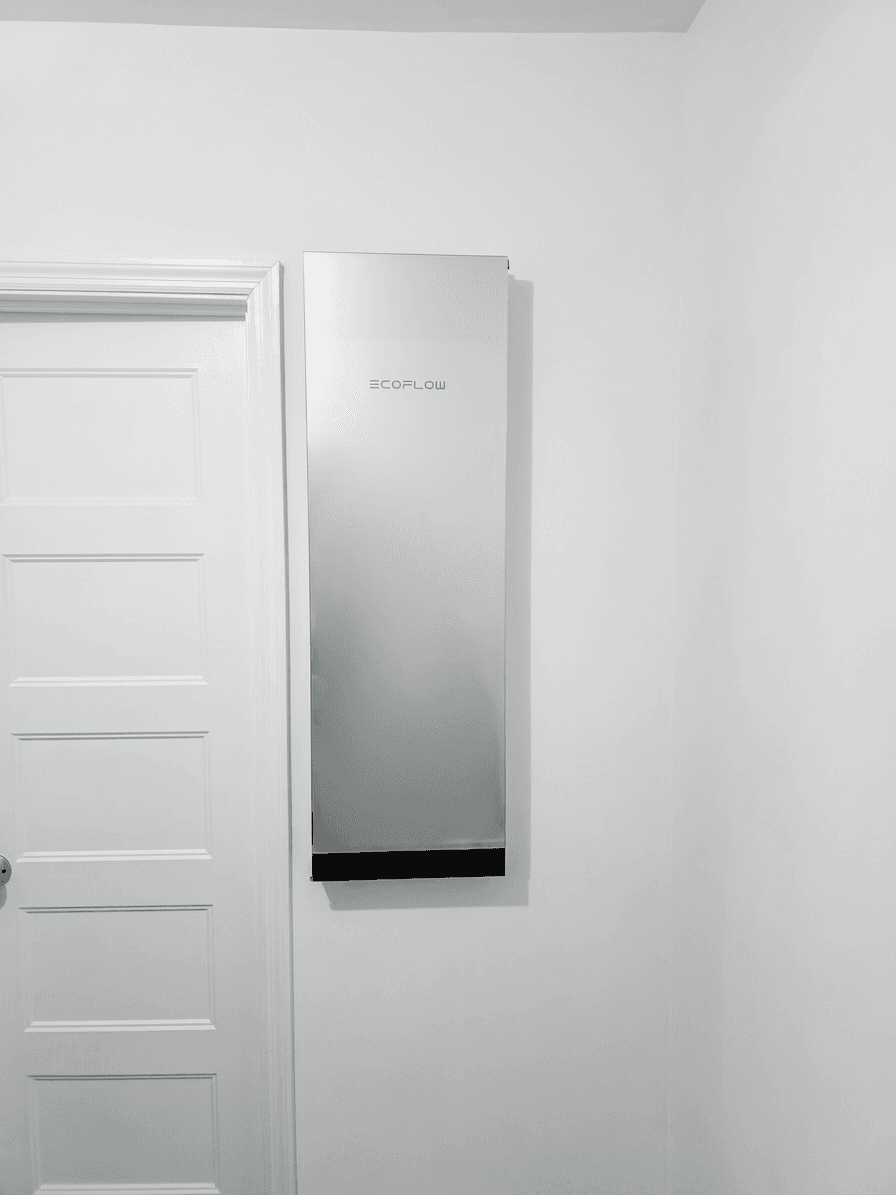
We went with the Smart Home Panel. The manual route is legitimate, and it is what we would suggest to somebody buying purely for storm backup on a tight budget — but full automation and control was worth the extra cost here.
It is worth seeing what that actually means physically: the panel becomes your main service panel, which is why the install is a different job from hanging a battery on a wall. What the install involves →
What it costs, all in
Three numbers, quoted by two different people.
The battery
$3,700–$4,300 for a DELTA Pro Ultra, $7,000–$8,000 for the X
The smart panel
$2,800–$3,200 — required for automatic transfer
Installation
$2,500–$8,000, quoted by a licensed electrician
That puts a realistic installed total between $9,000 and $19,200, depending on system size and how awkward your electrical work turns out to be. The installation spread is wide for a reason — panel location, cable run length, copper versus aluminum, permits, and your local inspector all move it.
The federal credit changes what you actually pay. What the 2026 tax credit covers → Hardware pricing here is a 2026-06 snapshot and moves with sales.
Where EcoFlow falls short
Three things worth knowing before you commit, none of which appear in the marketing.
- •Commissioning needs internet. Which is awkward if you are installing during an outage — someone may need to hotspot the setup.
- •The app leans on the cloud. Backup itself is local, but day-to-day monitoring routes through EcoFlow's servers unless you run it yourself over local Bluetooth.
- •Future models face an FCC hurdle. Foreign-made inverters were added to the FCC Covered List in 2026. Systems already authorized — including these — are unaffected and firmware updates are protected, but new models are paused.
More on running it locally with no cloud and what the FCC ruling actually means.
Charleston, SC
We run this hardware
NRG Sense is run by a Charleston resident and Marine veteran running a DELTA Pro Ultra and Smart Home Panel 3 on Dominion Energy's Rate 7. The monthly bills are published, including the months with zero on-peak charges — which is what this hardware looks like when it is doing its job.
Common questions
Which EcoFlow whole home battery should I buy?
For most homes the DELTA Pro Ultra is enough — 6.1 kWh to start, expandable, and 7.2 kW of output covers essential circuits comfortably. Step up to the DELTA Pro Ultra X if you want to run central air conditioning, need more than about 30 kWh of storage, or plan a large solar array. The X delivers 12 kW continuous with a 45 kW surge, which is what a 5-ton air conditioner needs to start.
Do I need the Smart Home Panel 3 with an EcoFlow battery?
Highly recommended, but not strictly required. The cheaper alternative is a generator inlet box plus an interlock kit fitted to your existing panel, which lets you back-feed the house from the battery manually — kill the main, slide the interlock, plug in, switch on the circuits you want. It is code-compliant and costs a fraction of a smart panel. The Smart Home Panel 3 ($2,800–$3,200, plus meaningfully more installation labour) buys you automatic transfer in a fraction of a second, and it is what makes daily time-of-use bill savings practical — nobody switches their house over by hand twice a day.
How much does an EcoFlow whole home battery cost installed?
Budget three separate numbers: the battery ($3,700–$4,300 for a DELTA Pro Ultra, $7,000–$8,000 for an Ultra X), the Smart Home Panel 3 at $2,800–$3,200, and professional installation at $2,500–$8,000. All in, that lands roughly between $9,000 and $19,200 depending on system size and how difficult your electrical work is.
How much can I expand an EcoFlow DELTA Pro Ultra?
Each DELTA Pro Ultra takes up to 4 extra battery modules of 6.1 kWh each, reaching about 30 kWh per inverter. The Ultra X takes up to 8, reaching about 61 kWh. Modules run $1,900–$2,200 each, so you can start smaller and add capacity later rather than committing to the final size up front.
Can an EcoFlow battery run central air conditioning?
The DELTA Pro Ultra X can, with 12 kW continuous output and a 45 kW surge rating that handles the startup draw of a 5-ton unit. The standard DELTA Pro Ultra at 7.2 kW generally cannot sustain central air. Either way, central air drains stored capacity quickly — expect a few hours rather than overnight unless the system is large.
Does an EcoFlow battery work without internet or the cloud?
Day-to-day backup works without internet — the transfer happens locally in the hardware. Initial commissioning does need connectivity, which matters if you are installing during an outage. For ongoing control there is a well-supported route to running the system locally over Bluetooth through Home Assistant, with no cloud dependency at all.
Looking at Anker too? EcoFlow vs. Anker SOLIX compares them on output, solar, scaling, and the transfer hardware where they differ most. Whole home battery backup explained covers the wider category, and sizing works through kWh versus kW. Questions of your own? Ask directly →